Society

Exploring societal dynamics, cultural shifts, demographic changes, and social challenges in the Balkans. Focused on understanding the region’s evolving identity and community-driven transformations.

Latest Analysis

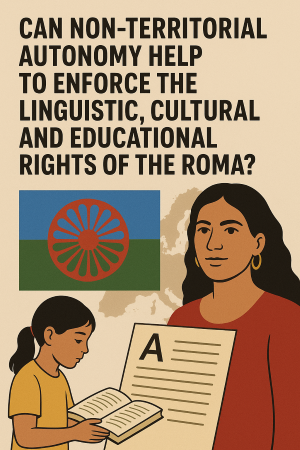
Can Non-Territorial Autonomy Help to Enforce the Linguistic, Cultural and Educational Rights of the Roma

Can Non-Territorial Autonomy Help to Enforce the Linguistic, Cultural and Educational Rights of the Roma

Strategies of discrimination against and expulsion of the Roma persist in the policies of contemporary democratic and non-democratic countries, including those that respect human rights and those with challenges in that regard. The ongoing structural discrimination that the Roma face has not yet been properly addressed; the current minority rights framework (Kymlicka, 2008) and post-1990s minority regimes in Europe remain unhelpful for many Roma. The measures that have been proposed to date to address social exclusion and marginalization in many cases are largely unenforceable; they tend to overlook the harsh living conditions, lack of access to public services, low level of education and the prejudices against and hostility towards the Roma. Moreover, they do not recognize diversity within the Roma community and instead see it as a homogeneous population (Pogány, 2006). Due to social exclusion, embedded discrimination, a history of persecution and its cultural specificity, the Roma community has particular difficulties in achieving some socially established objectives. The priority areas are interconnected: for example, if the Roma are unable to receive an adequate education

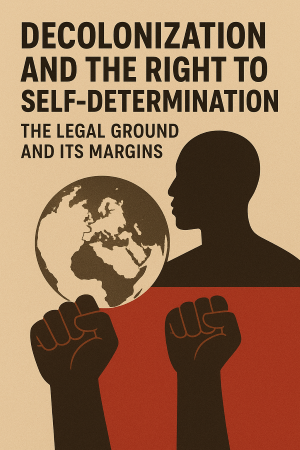
Decolonization and the right to self-determination:  the legal ground and its margins

Decolonization and the right to self-determination: the legal ground and its margins

The ideas about self-determination evolved from the Wilsonian understanding of self-governance - to a norm and drive for decolonization that changed the 20th century’s landscape. Despite its general proclamation as a right to all, the UN applied it as a “principle of saltwater”. Hence, the only legitimate right holder – colonial peoples could realize self-determination under several legal instruments and within the principle of uti possidetis juris that preserved the artificiality of the borders. The legal controversies of the decolonization processes are numerous and its loose end appears to be present up to now since the same principles were applied during the dissolution of the socialistic federations after the fall of the Iron Curtain.

Violence and Pornography on Television

Violence and Pornography on Television

Television is a constant part of everyday life, and because of its deep presence, concerns no longer focus on removing it as a medium, but on understanding its effects—especially on adolescents, who are considered a vulnerable group. Research has shown that television can negatively influence adolescents’ cognitive and intellectual development, creativity, imagination, social skills, sensory development, sense of wonder, and overall health.

Harmful television content includes violence, erotic scenes, illegal sexual behavior, vulgar speech, and easily imitable but dangerous actions. Violence and pornography are identified as having the strongest negative impact on minors.

Previous studies by Sanja A?aip (2008) and Joe Grixti (2000) provide insight into adolescents’ attitudes about these issues. In Macedonia, no such research had been conducted before, making this analysis especially relevant for understanding the influence of harmful media content on young audiences in the country.

The general conclusion is that society has lost a sense of responsibility in supporting the healthy development of young people. Television violence and pornography can significantly shape the behavior of children and adolescents. Therefore, modern media should prioritize creativity, information, and healthy entertainment, rather than profit through violent or pornographic content.

The work aims to encourage greater responsibility among all social actors in reducing harmful content on television, helping build aware, responsible, and emotionally healthy adolescents.

EU report on Serbia

EU report on Serbia

The EU’s latest report on Serbia presents a mixed assessment, highlighting economic stability alongside persistent challenges in governance and rule of law. While Serbia has maintained macroeconomic stability, with moderate growth and a relatively resilient banking sector, structural weaknesses in public administration, transparency, and accountability remain significant obstacles. The judiciary continues to face political interference, a lack of transparency in appointments, and inconsistent implementation of laws, undermining public trust. Corruption is deeply rooted, particularly in public procurement, infrastructure projects, and local administration, with high-level investigations and convictions still limited. Media freedom is under pressure, with increasing political influence over outlets, harassment of journalists, and uneven enforcement of regulatory frameworks. Civil society actors face legal and political challenges, and public consultation processes often lack genuine inclusivity. Political polarization and concentration of power continue to hinder reform implementation, while incidents like public infrastructure failures illustrate systemic accountability gaps. The report stresses that although Serbia has potential for EU integration, meaningful progress in judicial independence, anti-corruption measures, media freedom, and democratic governance is essential to maintain credibility and advance on the EU accession path.

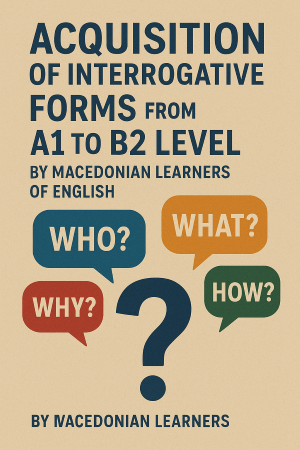
ACQUISITION OF INTERROGATIVE FORMS FROM A1 TO B2 LEVEL BY  MACEDONIAN LEARNERS OF ENGLISH

ACQUISITION OF INTERROGATIVE FORMS FROM A1 TO B2 LEVEL BY MACEDONIAN LEARNERS OF ENGLISH

his article aims to provide an overview of the verb forms EFL learners use in the process of acquisition of interrogative forms. It also explores learners’ L1 (Macedonian) influence on L2 acquisition. The research is based on data taken from the Macedonian Corpus of English Interlanguage, which contains written language of students aged 8-15, A1-B2 level. As the research shows, learners have no difficulties in acquiring interrogative forms. Nevertheless, the number of errors remains stable across all levels. In addition, there is minimal influence of L1. L1 transfer related errors could also be treated as developmental errors, since they also appear in learners with L1 other than Macedonian. The existence of developmental errors proves that language learners have their own interlanguage. Such errors help teachers adjust their expectations and teaching methods.

Document