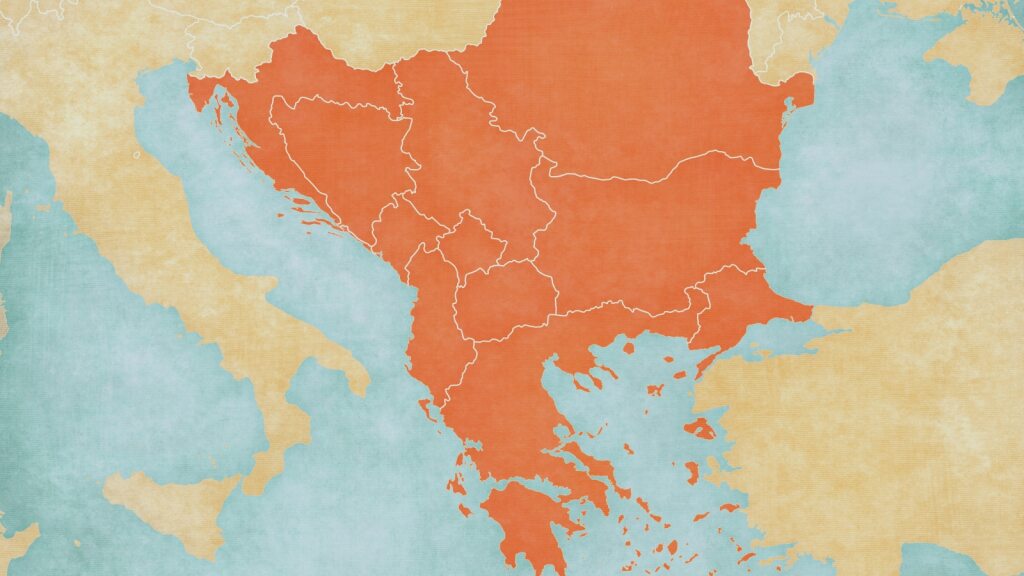
The legal systems of North Macedonia and Albania share deep historical, cultural, and political connections, yet they have evolved along distinct paths shaped by different transitions, reforms, and international influences. Both countries belong to the civil law tradition, characterized by codified legal norms, the primacy of written legislation, and a hierarchical structure of legal sources. Their contemporary legal orders reflect post-socialist transformation processes and efforts toward integration into the European Union, which has become the central driving force behind legal modernization, institutional reforms, and the strengthening of the rule of law. Despite these similarities, notable differences exist in the structure of governance, the organization of the judiciary, and the pace of legal harmonization with EU standards. The Macedonian legal system emerged after the dissolution of the Socialist Federal Republic of Yugoslavia in 1991, marking the country’s transition from a socialist republic to an independent democratic state. Its legal framework was heavily influenced by the Yugoslav legal tradition, which combined socialist legal ideas with continental European principles. Following independence, North Macedonia adopted a new Constitution in 1991 that established the country as a sovereign, democratic, and social state governed by the rule of law. The Constitution guaranteed the separation of powers, protection of human rights, and independence of the judiciary. Albania, on the other hand, experienced a different historical trajectory. After the fall of the communist regime in 1991, the country underwent a rapid and difficult transition from one of Europe’s most isolated totalitarian states to a pluralistic democracy. The Albanian Constitution of 1998 established a parliamentary republic and embraced the principles of democracy, separation of powers, and fundamental human rights. However, the legal vacuum left by the collapse of the previous regime required extensive reforms in nearly all areas of law, from criminal justice to property rights, leading to one of the most ambitious legal overhauls in the region. In both Macedonia and Albania, the Constitution stands at the top of the hierarchy of legal norms, followed by international agreements, statutory laws, and secondary legislation. The constitutional courts in both countries are entrusted with protecting the constitutionality of laws and safeguarding fundamental rights. The Macedonian Constitutional Court, established under Article 108 of the Constitution, ensures the supremacy of constitutional principles and has the authority to annul acts that violate them. Similarly, Albania’s Constitutional Court performs a crucial role in reviewing the constitutionality of laws, resolving institutional disputes, and guaranteeing the balance among state powers. In practice, however, both institutions have faced challenges related to political influence, delays in decision-making, and public trust. Regarding the organization of the judiciary, both systems reflect the continental model with courts of general jurisdiction and specialized courts. In Macedonia, the judicial system includes basic courts, appellate courts, an Administrative Court, a Higher Administrative Court, and the Supreme Court as the highest judicial authority. In addition, the Judicial Council ensures judicial independence by managing appointments, promotions, and disciplinary procedures for judges. In Albania, the court system is organized similarly, comprising district courts, courts of appeal, and the Supreme Court. A major judicial reform launched in 2016, supported by the European Union and the United States, introduced a comprehensive “vetting” process for judges and prosecutors aimed at eliminating corruption and strengthening judicial integrity. This reform has been one of the most significant transformations in Albania’s post-communist history, leading to the dismissal of a large number of judges and prosecutors who failed to justify their assets or demonstrate professional competence. North Macedonia has also undertaken judicial reforms, especially under the framework of its EU accession process. However, the reforms have advanced more gradually compared to Albania’s more radical overhaul. In Macedonia, the emphasis has been placed on enhancing transparency, reducing political interference, and improving efficiency within the courts, while Albania’s approach has focused on systemic cleansing and restructuring of the entire judicial hierarchy. The sources of law in both countries are primarily codified. The Macedonian legal order is structured around comprehensive codes such as the Law on Obligations, the Criminal Code, the Civil Procedure Law, and the Law on Administrative Disputes. Albania’s main sources include the Civil Code, Criminal Code, Family Code, and Commercial Code, all of which have undergone numerous revisions since the early 1990s to align with European legal standards. In both systems, judicial precedent does not constitute a formal source of law, consistent with the civil law tradition. Nevertheless, the decisions of higher courts, particularly those of the Constitutional Court and Supreme Court, carry significant interpretative authority and contribute to consistency in judicial practice. In the area of constitutional rights and freedoms, both Macedonia and Albania recognize broad guarantees of equality before the law, freedom of expression, religion, and association, as well as the right to a fair trial and property rights. Both are parties to the European Convention on Human Rights, and the jurisprudence of the European Court of Human Rights (ECHR) plays an important role in domestic legal interpretation. However, the implementation of human rights protection varies in practice. Macedonia’s EU integration process has fostered steady progress in aligning national law with European human rights standards, whereas Albania, despite notable advances, still struggles with enforcement due to corruption, inefficiency, and limited administrative capacity. Another important point of comparison is the relationship between the executive and the judiciary. In both states, political influence over the judiciary remains a persistent challenge. In Macedonia, judicial independence has often been questioned due to the influence of political elites, particularly in high-profile cases involving corruption and political figures. Albania’s experience has been similar, with the justice system historically perceived as one of the most corrupt sectors of the state. The ongoing vetting process has improved public confidence but has also created temporary institutional gaps due to the shortage of vetted judges and prosecutors. In criminal law, both systems have modernized their penal codes to reflect European standards, emphasizing legality, proportionality, and human rights protection. Macedonia’s Criminal Code has introduced progressive provisions regarding organized crime, corruption, and gender-based violence. Albania’s Criminal Code has also undergone major reforms, particularly in combating human trafficking, money laundering, and domestic violence. However, both countries face difficulties in the consistent and impartial enforcement of criminal laws. In civil law, Macedonia’s legal system still relies on fragments of former Yugoslav legislation that have been gradually adapted to contemporary needs, whereas Albania has developed a unified Civil Code based on Italian and French legal traditions. Both legal systems recognize private property rights, freedom of contract, and equality of parties before the law, though property restitution remains a sensitive issue in Albania due to unresolved ownership disputes dating back to the communist era. In terms of legal education and professional practice, both countries require a law degree and completion of bar examinations for admission to the legal profession. The bar associations in both Macedonia and Albania play a vital role in regulating the legal profession and promoting ethical standards. However, the Albanian Bar Association has historically been more active in public advocacy, while Macedonia’s legal profession remains more institutionally dependent on state regulations. Both systems share the common goal of achieving full compliance with EU standards in the field of justice, freedom, and security. North Macedonia has advanced further in the formal process of EU accession, holding candidate status since 2005 and initiating negotiations in 2022. Albania also holds EU candidate status, but its accession process is closely tied to the successful completion of justice reforms and measurable progress in combating corruption. Both countries have adopted national strategies for judicial reform, anti-corruption policies, and administrative modernization, often supported by EU and Council of Europe programs. In conclusion, the Macedonian and Albanian legal systems represent two evolving post-socialist frameworks moving toward the same destination—European legal and institutional integration. They share common civil law foundations, similar constitutional principles, and comparable challenges in ensuring judicial independence, transparency, and accountability. Macedonia’s legal transformation has been marked by gradual, stability-oriented reforms within a more institutionalized political environment, while Albania’s path has been characterized by bold and sweeping measures aimed at rebuilding the justice system from its core. Despite their different tempos and strategies, both legal systems demonstrate a clear commitment to the principles of democracy, rule of law, and human rights, which remain the cornerstone of their future within the European legal family.