

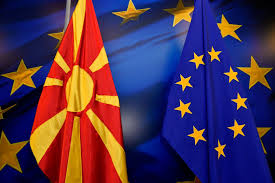
North Macedonia has pursued European Union integration for decades, seeing it as both a political and civilizational goal that would secure democracy, economic growth, and regional stability. The country officially became a candidate for EU membership in 2005, but the road since then has been long and complicated. For many years, the main obstacle to progress was the name dispute with Greece, which prevented the country from opening accession negotiations. This issue was finally resolved in 2018 through the Prespa Agreement, under which the country adopted the name “Republic of North Macedonia.” The agreement was widely recognized as a major diplomatic achievement and removed one of the most significant barriers to the country’s EU aspirations. However, even after that, new challenges emerged, particularly in relations with Bulgaria. Sofia has conditioned its support for North Macedonia’s EU path on issues related to history, language, and the recognition of a Bulgarian minority in the Macedonian Constitution. These demands have created tensions and have become a politically sensitive topic inside North Macedonia, as many citizens view them as interference in national identity and internal affairs.
The government in Skopje remains firm in its official position that EU integration is a strategic priority. Political leaders repeatedly affirm that despite the obstacles and what they often describe as unfair conditions, North Macedonia continues to align its institutions, laws, and policies with EU standards. The authorities emphasize reforms in the judiciary, public administration, anti-corruption efforts, and rule of law as the foundation for EU membership. Yet, this process has not been easy. Some of the required changes—especially the constitutional amendment to include the Bulgarian minority—face strong domestic opposition. Many political parties and segments of society see such measures as going beyond the Copenhagen criteria and entering into the realm of historical revisionism. The debate has therefore moved beyond a simple question of technical reforms into a deeper struggle over sovereignty and identity. The government tries to balance these pressures by maintaining dialogue with EU institutions and Bulgaria while also reassuring citizens that the national identity and language are not being compromised.
Public opinion in North Macedonia generally supports EU integration, but enthusiasm has declined compared to previous years. Surveys show that between sixty and seventy percent of citizens still want to join the EU, but skepticism is growing. Many people feel disappointed by the slow pace of negotiations and by the fact that the country continues to meet new demands even after fulfilling previous ones. Some citizens believe that membership might not happen in their lifetime, while others think the EU itself is losing interest in further enlargement. The sentiment is especially complex among the ethnic Macedonian population, where national pride and questions of historical identity play a strong role. Among the ethnic Albanian population, however, support for EU integration remains almost universal, reflecting a belief that it would bring greater equality, prosperity, and stability. Across the board, citizens also express concern that corruption, weak institutions, and political clientelism are still major obstacles inside the country, regardless of external factors. For many, joining the EU symbolizes not only a foreign policy goal but also an internal transformation towards a more just and efficient society.
The main difficulties North Macedonia faces on its European path can be divided into several categories. The first are bilateral disputes, most notably with Bulgaria. Sofia’s insistence on historical and linguistic concessions has been widely criticized in North Macedonia as an abuse of EU membership for nationalistic purposes. Many Macedonians believe that the EU should prevent such bilateral issues from blocking enlargement, as they go beyond the fundamental criteria for membership. The second set of challenges involves domestic reforms. Although progress has been made in certain areas, the fight against corruption, the independence of the judiciary, and the efficiency of public administration still require substantial improvement. The third challenge lies in managing expectations. Citizens are tired of promises and want concrete progress, not just new political statements. If accession continues to be delayed, support for the EU could decline further, creating space for populist or Eurosceptic movements. The final challenge is political unity. The issue of constitutional amendments has divided the government and opposition, with some leaders proposing temporary or delayed solutions to avoid deep polarization. However, without political consensus, it is difficult to move forward decisively.
Despite these complications, North Macedonia’s strategy remains centered on perseverance and reform. The government argues that joining the EU is not only about fulfilling criteria but also about anchoring the country in the European system of values. It stresses that reforms in governance, justice, and the economy are beneficial for citizens regardless of the membership timeline. At the same time, officials have urged Brussels to demonstrate political will and fairness by keeping the process merit-based, transparent, and free from bilateral manipulation. Many in Skopje believe that the EU should send stronger political signals, especially after the country’s long record of compromise and constructive behavior. North Macedonia has often been described as a “test case” for the credibility of the EU enlargement policy—whether the Union can reward reforms and honor its commitments.
Looking ahead, the future of North Macedonia’s EU integration depends on several key factors: whether the constitutional amendments will be adopted, whether Sofia will continue to impose new conditions, and how quickly the EU itself will advance its enlargement agenda. There is cautious optimism that if the bilateral dispute is resolved and reforms continue, the country could make real progress in the coming years. However, many experts warn that without visible results soon, frustration could deepen and public trust in European institutions could erode. Still, despite fatigue and disappointment, North Macedonia has not abandoned its European course. The general consensus in society and politics is that there is no viable alternative to EU membership. The path may be slow, and the conditions difficult, but the ultimate goal remains unchanged: to secure North Macedonia’s place as a full member of the European family, ensuring stability, prosperity, and the protection of its democratic identity within the broader European framework.