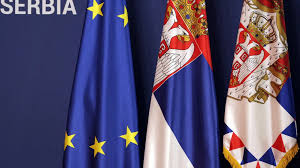
The EU’s latest report on Serbia presents a mixed assessment, highlighting economic stability alongside persistent challenges in governance and rule of law. While Serbia has maintained macroeconomic stability, with moderate growth and a relatively resilient banking sector, structural weaknesses in public administration, transparency, and accountability remain significant obstacles. The judiciary continues to face political interference, a lack of transparency in appointments, and inconsistent implementation of laws, undermining public trust. Corruption is deeply rooted, particularly in public procurement, infrastructure projects, and local administration, with high-level investigations and convictions still limited. Media freedom is under pressure, with increasing political influence over outlets, harassment of journalists, and uneven enforcement of regulatory frameworks. Civil society actors face legal and political challenges, and public consultation processes often lack genuine inclusivity. Political polarization and concentration of power continue to hinder reform implementation, while incidents like public infrastructure failures illustrate systemic accountability gaps. The report stresses that although Serbia has potential for EU integration, meaningful progress in judicial independence, anti-corruption measures, media freedom, and democratic governance is essential to maintain credibility and advance on the EU accession path.

