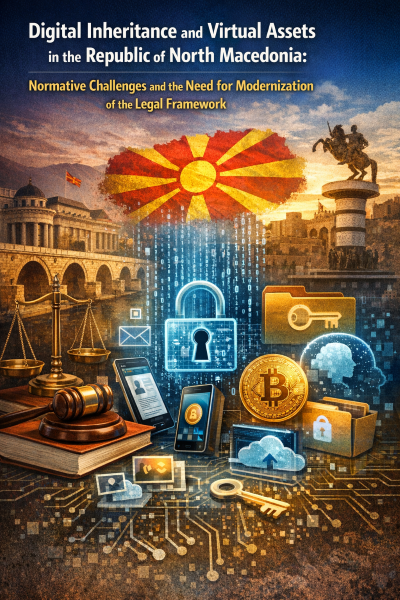
Digital Inheritance and Virtual Assets in the Republic of North Macedonia: Normative Challenges and the Need for Modernization of the Legal Framework
The digital transformation has created new forms of property with legal and economic value, which are also becoming increasingly important in inheritance relations. The category of digital assets includes crypto-assets, monetized electronic accounts, domains, licenses to use cloud services, as well as digital content with financial or personal value.
In many legal systems, these assets pose particular challenges due to the lack of direct regulation, the conflict between the right of heirs and the right to privacy, and the impact of contractual terms of digital platforms on the practical realization of inheritance. In the Republic of North Macedonia, the existing framework in inheritance law, obligations and personal data protection still does not provide clear solutions for the identification, valuation and transfer of digital assets after death.
The paper addresses the legal nature of digital assets, practical and normative difficulties, and proposes directions for legislative modernization, including explicit recognition of digital heritage, asset categorization, and standardized procedures for heir access, drawing on European examples of regulation and case law.